

Bones of the earth.
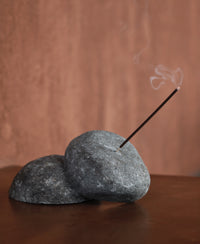
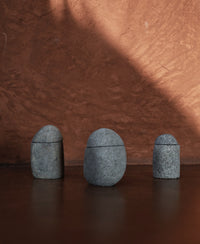
This stool sits somewhere between an object and an artefact. Formed over time, the stone originates from the riverbeds of a rural temple village – carrying a sense of place within its surface.
Function follows quietly. Used as a stool, side table, or sculptural plinth, it invites touch and pause – offering stability through its mass. Each piece is entirely unique, defined by natural variations in tone, texture, and markings.
Aside from a polished, level top surface, the form is left largely untouched to honour the integrity of the material. Weighing over 100 kg, it remains a piece of the earth – transported from another place and time.